The Old French Railway on Don Det and Don Khon
A day along the short line built to move boats and goods around the Khone Falls, from the railway bridge to the locomotive and old loading piers.
- From Pakse
- About 3 hours by road
- At its best
- Any season
Morning on Don Det, and the railway is a line to follow rather than a train to catch. The old bed crosses the island and continues across Don Khon. It is used now by walkers and cyclists. The route is about 7 km long, a modest measure for a railway, but its job was a big one: getting boats and goods around the Khone Falls.
That job is the part to keep in mind as the day takes shape. The French built the line to carry boats and cargo past the falls. Not through them; around them. The railway made a short land route between parts of a journey that otherwise depended on boats. There is a neatness to the idea, and a stubbornness too. The falls were an obstacle to river traffic, so the railway went around.
The island line operated from the 1890s until the 1940s. Those dates give the railway a clear beginning and end, even if the route itself is easier to understand on the ground. A short line across two islands, a bridge between them, and places to take cargo off and put it back on boats. That is the whole useful shape of it. The numbers are small; the purpose is plain.
It belongs in the story of the French dream of a river road to China, though this line had a particular task close at hand. Around the Khone Falls. For a day’s walk, that difference matters. It keeps the railway from turning into a grand, vague idea and brings it back to its actual route across Don Det and Don Khon.
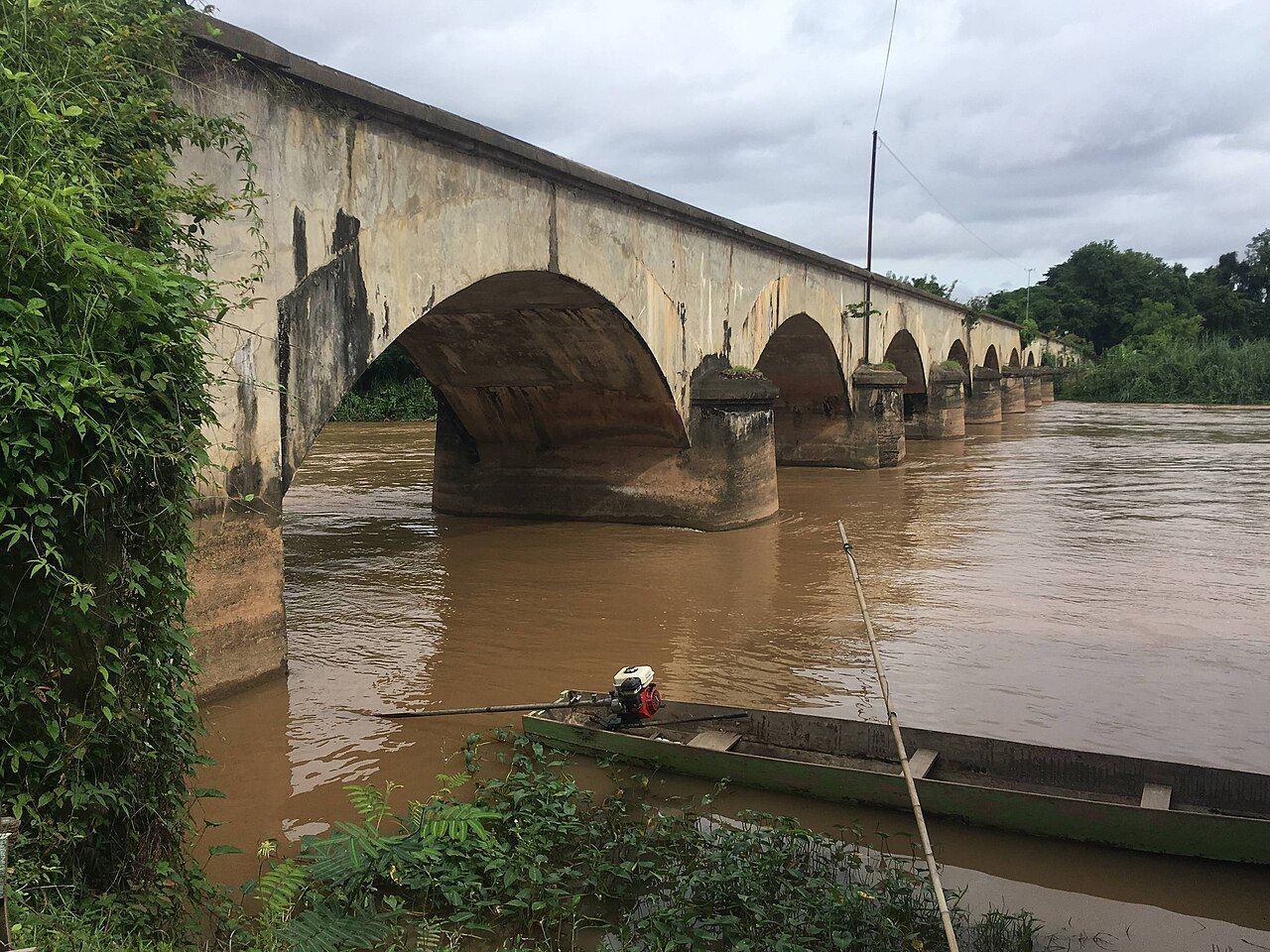
From Don Det, the old railway bed leads towards the bridge built by the French. The bridge links Don Det and Don Khon, and it is the point where the route joins the two islands in a way that can still be followed. A railway bridge is more than a remnant beside the line. It is part of the line’s answer: the railway had to connect the islands as it carried its loads around the falls.

The bridge is the day’s hinge: the route passes from Don Det to Don Khon, and the railway’s purpose becomes easier to hold in mind.
The bridge is the day’s hinge: the route passes from Don Det to Don Khon, and the railway’s purpose becomes easier to hold in mind.
The plain facts hold their shape. The bridge joins the islands; the old railway bed runs across them; the whole line was about 7 km. I like this kind of route, where the shape of the ground and the purpose of the old works stay close together. No grand detour into guesswork. Just the crossing, and the reason it was made.
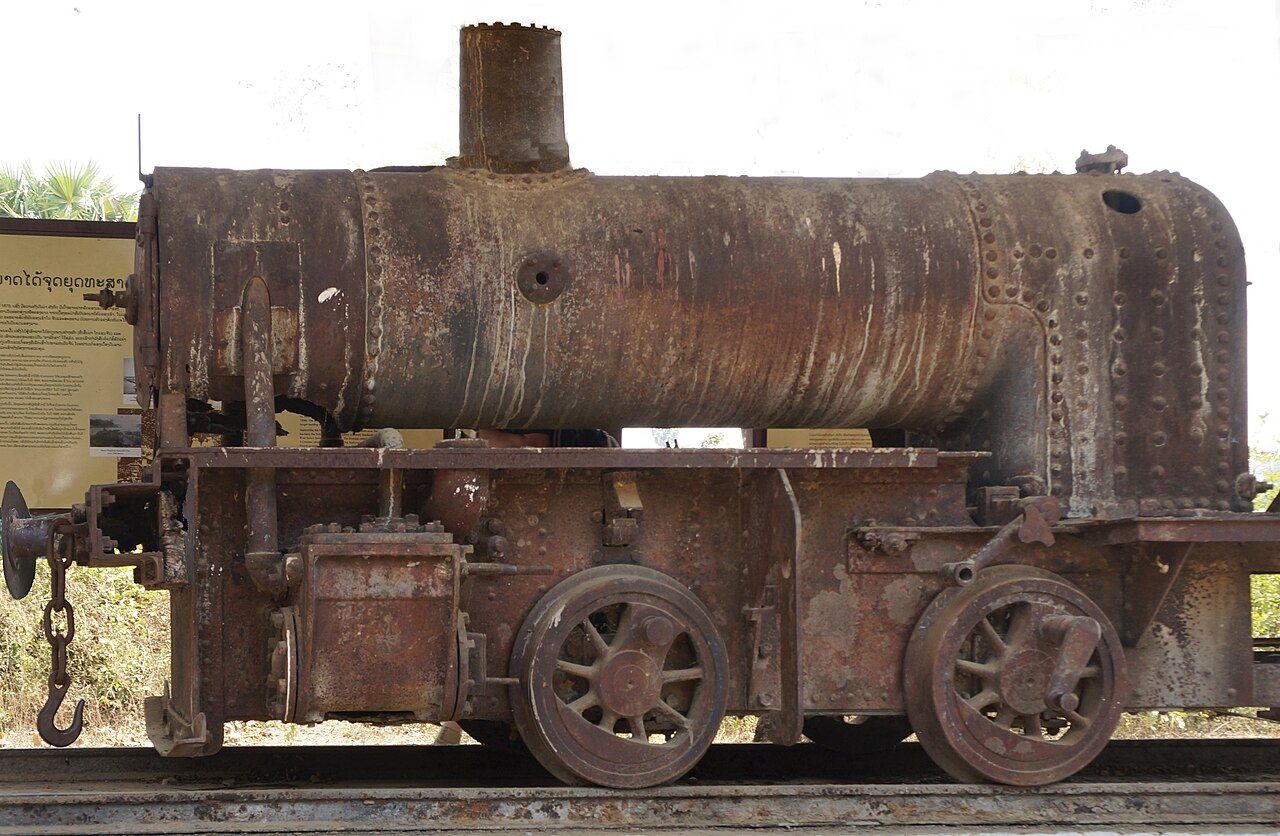
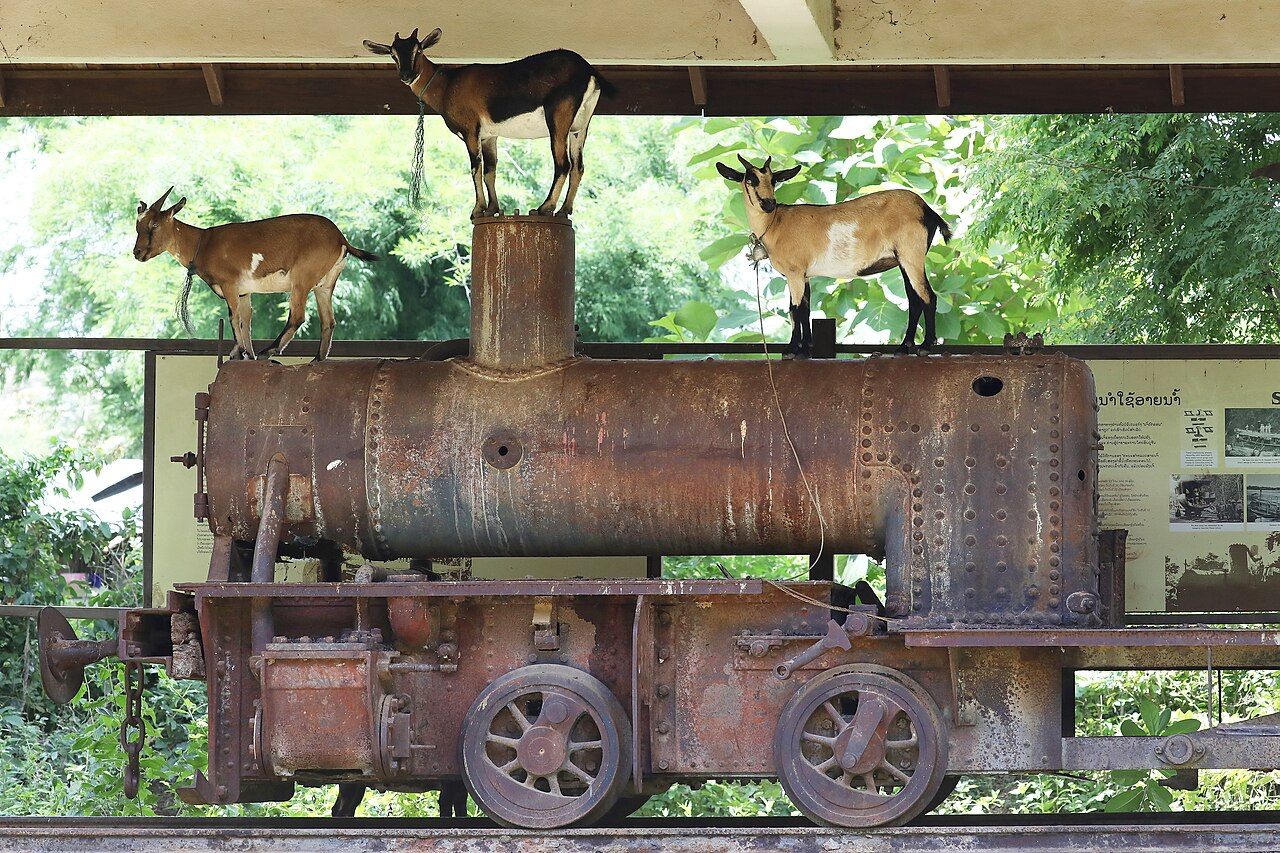
On Don Khon, the old steam locomotive stands near the former line. It gives the railway a solid object to gather around after following a route that is mostly an old bed and a bridge. A locomotive makes the word railway feel immediate. Here it stands beside the trace of the line it belonged to, a reminder that this was not only a plan to move cargo but a working railway.
Keep following the route towards the southern end of Don Khon. Concrete piers mark where cargo was loaded back onto boats. They make the railway’s purpose plain again. The goods came around the Khone Falls by land and were put onto boats for the next part of the journey. The piers are not a separate story from the bridge or the locomotive. They are the end of the same practical chain.

By this point, the line reads less like a curious leftover and more like a small piece of transport infrastructure with a very specific problem to solve. Boats and cargo needed a way around the falls. The railway crossed Don Det and Don Khon; the bridge linked the islands; at the southern end, cargo went back onto boats. Each part makes more sense beside the next one.
The old bed is now a track for walkers and cyclists, so the railway’s route still has a use, even though the line no longer operates. It is a good way to hold the day together: follow the bed, cross the bridge built by the French, find the locomotive near the former line, and reach the piers at the south. A paper map would have a simple job here. Keep the islands and the sequence straight.
The railway was the only one ever to operate in Laos until a short line opened at Thanaleng near Vientiane in 2009. That gives the island line an unusual place in the country’s railway history. It also gives the day a useful scale. This was a short railway, built for one route and one difficult passage, not a network spreading across the country.
From Pakse, the journey is about 3 hours by road, and the islands can be visited in any season. Once there, the route itself is straightforward to describe, even if the reasons for building it reach beyond the islands: Don Det, the bridge, Don Khon, the old bed, the locomotive, and the loading piers. The French line was short. Its purpose left a route that still carries people across the same ground.
By evening, the story comes back to the piers. Cargo reached the southern end of Don Khon and went aboard boats again. The railway’s work was to get it there around the falls, and the old route lets that purpose stay visible. On these islands, its short length is enough to make the line clear.