How Coffee Came to the Bolaven Plateau
Coffee on the Bolaven grew from early Arabica and leaf rust through abandoned plantations to renewed growth and a place among Laos’s leading agricultural exports.
- From Pakse
- About 1 hour by road
- At its best
- Harvest months
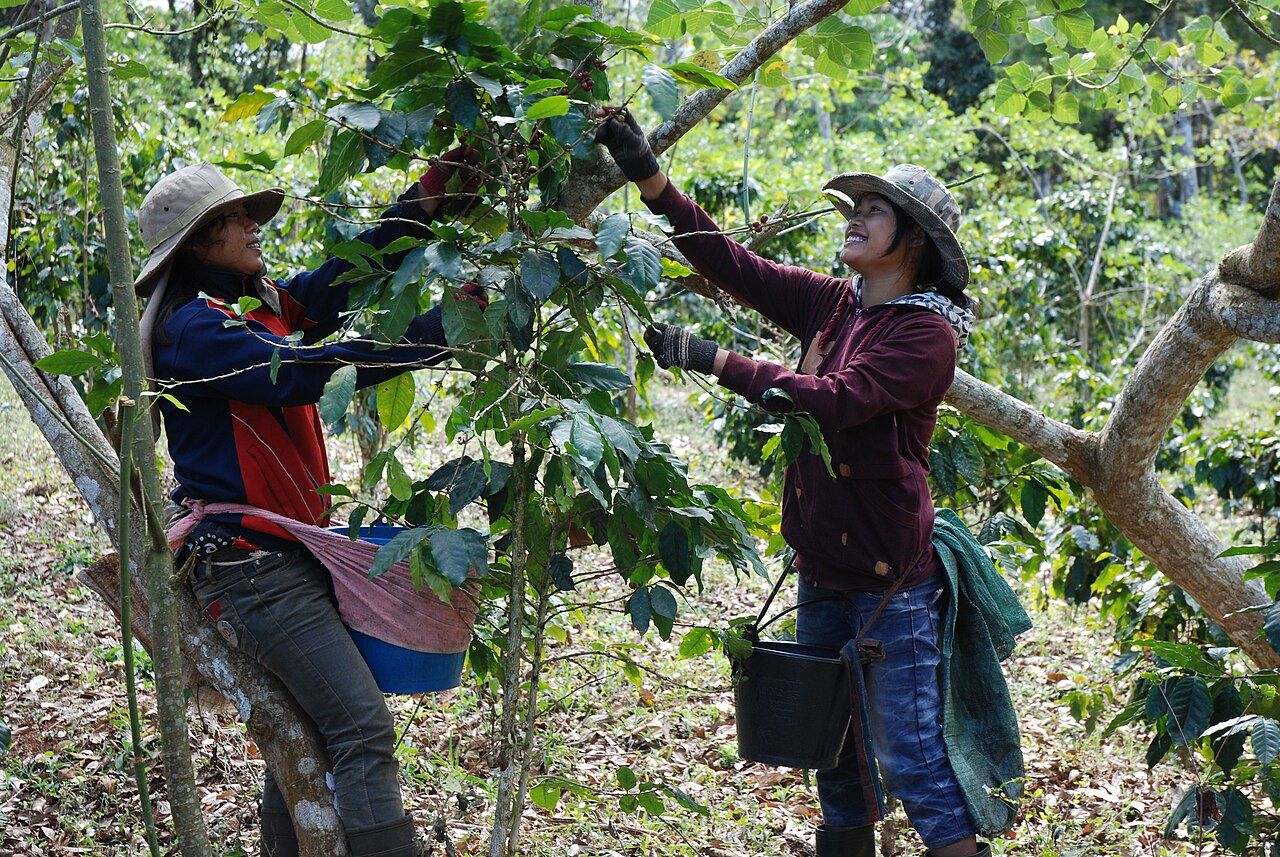
Start with the plateau’s contrast: cool nights, warm days. Those conditions slow the ripening of coffee cherries. Round here, that contrast sets the scene, though it is only the opening step. Coffee on the Bolaven has had to pass through more than growing conditions; the crop’s history turns on what was planted, what failed and what began again.
Follow the first planting. French colonists began planting coffee on the Bolaven Plateau in the early 20th century. Arabica came first. Keep that order in mind, because the story is not simply a matter of one crop arriving and staying put. The early plantings met a problem that would shape what farmers grew next. A neat beginning, then a rough turn. History does enjoy making a map less tidy.
Notice what leaf rust changed. Coffee leaf rust damaged the early arabica plantings on the plateau. That damage encouraged a shift towards robusta, which resisted disease better. It is a practical turn in the story: the crop that had been planted first was not the one that best answered the pressure from disease. The change helps explain why both arabica and robusta belong in the history, but not in the same place in its sequence.
Read the war years as a break. War in the 1960s and 1970s left many plateau plantations abandoned. That is not a small pause in a steady upward line. Plantations were left behind, and the story of coffee growing had to take a different shape. I like this part least, for good reason: it is hard to look at a crop’s history without noticing what war does to the work of keeping it in the ground.
Pick up the thread in the 1990s. Coffee growing on the plateau expanded again from that decade. The word “again” matters. It connects the renewed growth to the earlier plantings without pretending that the years between them were smooth or simple. After abandonment, expansion was a return to growing coffee on the plateau. Not a straight line, and not a story made more interesting by pretending otherwise.
Look at what the crop means now. Coffee has become one of the leading agricultural exports of Laos. Some plateau farmers grow coffee under organic or fair-trade certification. Keep the word “some” in view: it describes part of the farming here, not every farmer. The history moves from early arabica, through the shift to robusta and a period of abandonment, to renewed growth and a crop with a leading place in the country’s agricultural exports.
Bring the growing conditions back into the picture. Cool nights and warm days slow the ripening of the cherries. That detail sits alongside the history rather than replacing it. Weather did not erase leaf rust, war or the years of renewed growth. It gives another piece of the plateau’s coffee story: the land shapes how the crop ripens, while the planting history shows how the crop itself changed.
There’s another story to follow in Paksong town, where the plateau’s coffee history has a nearby place on the map.