Dao Heuang, the Great Market of Pakse
A walk through Dao Heuang’s produce, fish, cloth and household-goods sections, with plateau coffee and traders bringing goods from beyond Pakse.
- From Pakse
- In Pakse
- At its best
- Any season
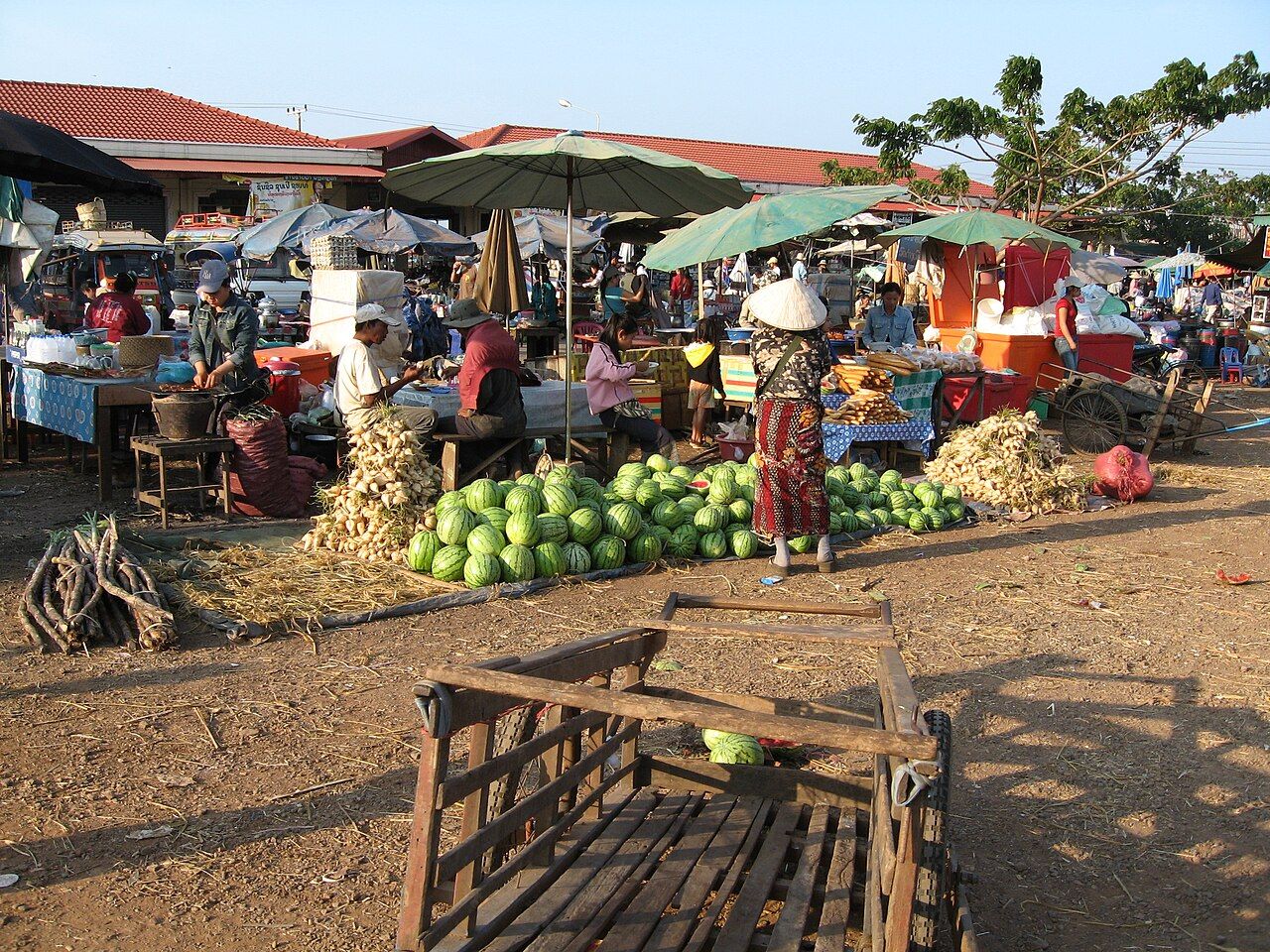
In Pakse, Dao Heuang spreads across several large buildings and the lanes around them. It is one of the largest markets in Laos, and the range is the first thing to notice: fresh produce, fish, cloth, clothing, household goods and bags of coffee. Round here, a market can be its own sort of map. This one has plenty of ground to cover.
Start with the produce. Vegetables and fruit from the Bolaven Plateau come into Dao Heuang, giving the market a close connection to the country just beyond Pakse. I like this part for its plain usefulness: the goods tell you where they come from, without needing much explanation. Take in the range, then follow the lanes onward.
The fish section has fresh and dried fish from the Mekong. Two forms of the same river catch, side by side in the market’s larger spread. It is a good reminder that Dao Heuang is not only a place for plateau produce. The Mekong belongs in this picture too, and the fish section gives it a clear place. A market map, if you like, with more than one direction on it.
Cloth and clothing fill the covered halls, along with household goods. These are different kinds of browsing from the fresh produce and river fish; the halls gather useful things under one roof. I have a soft spot for this part of a big market. There is something satisfying about the practical mix. Cloth, clothes, things for the house. No complicated introduction required.
Look for the bags of coffee from the plateau. They make another connection between Dao Heuang and the Bolaven Plateau, alongside the vegetables and fruit. Coffee sits among the market’s goods, not apart from the rest of the place. That matters to me. It keeps the plateau in view as a source of everyday market trade, rather than reducing it to one product or one section.
Keep in mind that goods come in from farther afield too. Traders from the surrounding provinces and from Thailand bring goods to Dao Heuang. That wider reach helps explain why the market feels so large in its layout: several big buildings, plus lanes around them. I would not try to turn the whole place into a checklist. Pick out the sections that interest you, and let the rest be part of the view.
Timing changes the feel of a visit. Dao Heuang is busiest in the early morning, so that is when the market is most full of its daily trade. The fresh produce, fish, cloth, household goods and coffee all belong to the same working place, but they give it different points of focus. For my money, the best approach is to notice one section at a time. A little less map-reading, a little more looking.
At the end, there is still the market’s full spread to hold in mind: plateau fruit and vegetables, Mekong fish, cloth, household goods, coffee, and goods brought from the surrounding provinces and Thailand. Dao Heuang is large enough that no single section has to stand for it. The lanes run around the buildings, and the list keeps going. That is a good place to leave it: with the market still opening out around the next turn.