What the Falls Do in the Rains
Red soil, rising water and spray change the plateau’s falls through the wet months. Round here, the brown-water season is the loud one.
- At its best
- Rainy season
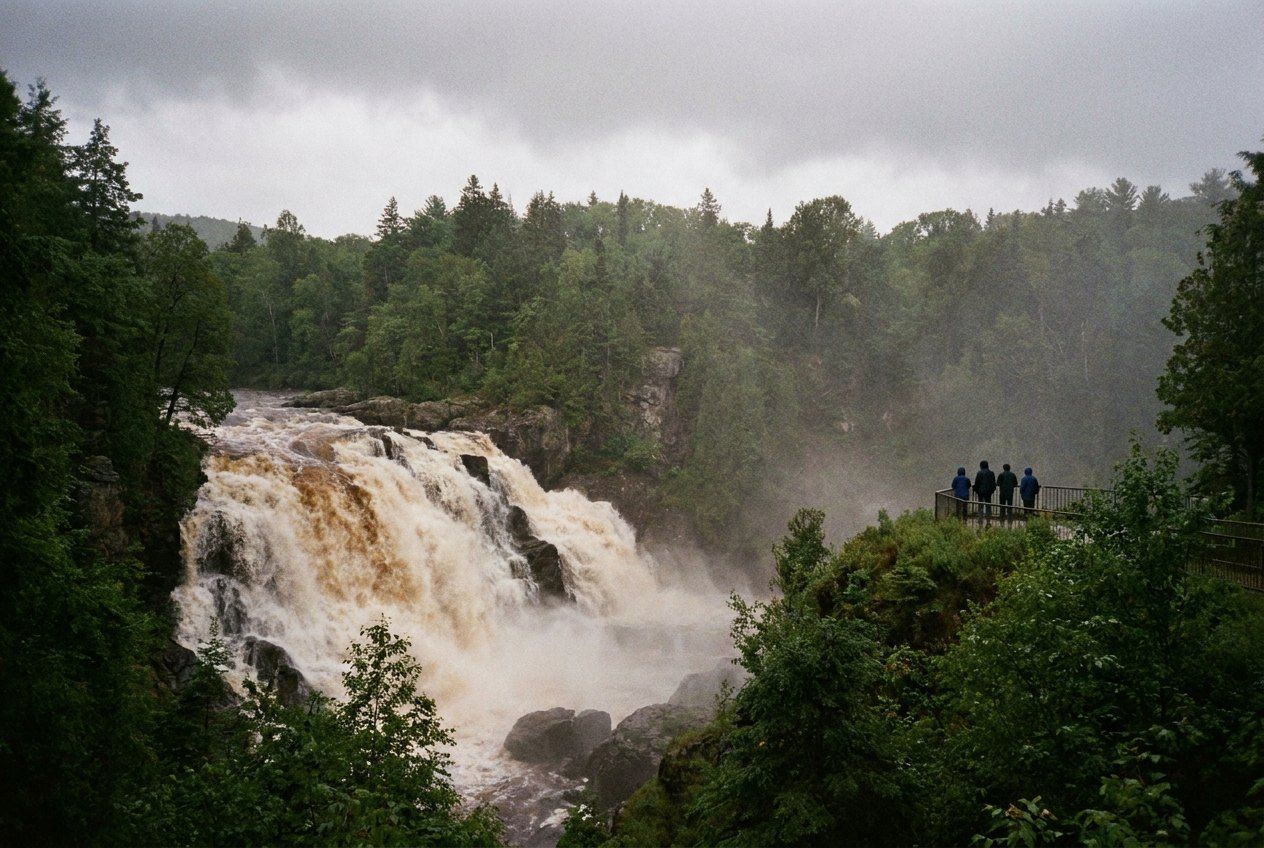
Round here, the brown-water months are the loud ones. The first thing to notice is the change in the water itself: red soil washing into streams, then moving over the falls. The plateau receives some of Laos’s heaviest rainfall, and most of it comes with the south-west monsoon between May and October. Colour, volume, spray and the feel of the path all change with it.
Colour comes first. In the rains, red soil washes into the streams and turns the waterfalls brown. It is a plain change, not a subtle one. The water carries the colour of the land around it, and the falls look different for it. For me, that brown is part of the season’s character, not a flaw to be waited out.
Then there is the noise. With more water moving through the falls, the wet months are the loud stretch of the year. That is especially true of the brown-water season. A waterfall is not just something to look at round here; when the rain is doing its work, sound becomes part of the view. The dry months bring a steady drop in volume, and the whole feel changes with it.
At the larger falls, the spray reaches the viewpoints and paths. In August and September, it can soak both. That is a different sort of closeness to the water: not standing in the stream, just being within reach of what the falls send out. The spray is one of the clearest signs that the wet season is in full force. A dry account of a waterfall misses this part.
The ground beside a waterfall has its own season, though not quite the one the calendar suggests. Rock beside a fall stays wet and slippery even in dry weather because of the spray. So the path does not become reliably dry just because the rains have eased. I like the way the falls keep a little of their own weather around them. The footing, less kindly, keeps the same opinion.
From November to April, the volume of the plateau’s falls drops steadily through the dry months. It is a gradual change rather than a switch. The water that looked brown and full in the rains becomes less forceful as the months pass. There is still the waterfall, of course, but its scale shifts. That quieter stretch has its own appeal; I’m firmly fond of both versions, though for different reasons.
By March and April, some of the smaller plateau falls shrink to a trickle. That is the dry season’s sharpest contrast with the rains: a fall that has been carrying more water can be reduced to a narrow thread. The larger falls and smaller falls do not make the same show, and the season draws that difference out. Around here, the brown water gets the noise; the late dry months show how little water some falls need to keep going.
Rain can also change a stream quickly. After storms on the plateau, flash rises can raise a stream within an hour. The seasonal pattern is one thing; a sudden rise after a storm is another. Both belong to the wet months, and both are part of how water moves across the plateau. The turn from wet months to dry has its own story in the turn from wet months to dry.