Paksong and the Coffee of the Bolaven
A day in the plateau’s main town, following coffee from red basalt soil and small family farms to the drying yards and the harvest season.
- From Pakse
- About 1 hour 15 minutes
- At its best
- Harvest from November
A paper map is a poor way to measure coffee country. It can show where Paksong sits, but not what makes the place make sense. The town is the Bolaven Plateau’s main centre, about 50 km east of Pakse, and coffee is part of the landscape around it. I like starting here: a town to get your bearings, then the crop that explains much of the plateau.
Start with the town. Paksong sits at roughly 1,200 metres above sea level, high enough to be noticeably cool. That feels like a useful first fact, not a footnote. The plateau has its own climate and growing conditions, and coffee is the crop most tied to its identity. Most of the coffee produced in Laos comes from the Bolaven Plateau. Around here, that is not a small detail to pass over on the way to the next view.
Then take in the layers of the place. Paksong was heavily damaged during the Second Indochina War and was largely rebuilt afterwards. That history belongs in a day here, even when the day is mostly about coffee. Town and crop are not separate subjects: Paksong is the main town of a plateau shaped by growing coffee, and the farms are part of the wider picture. The map can mark the town, but it cannot show how the rebuilt town and the farms fit into the plateau’s story.
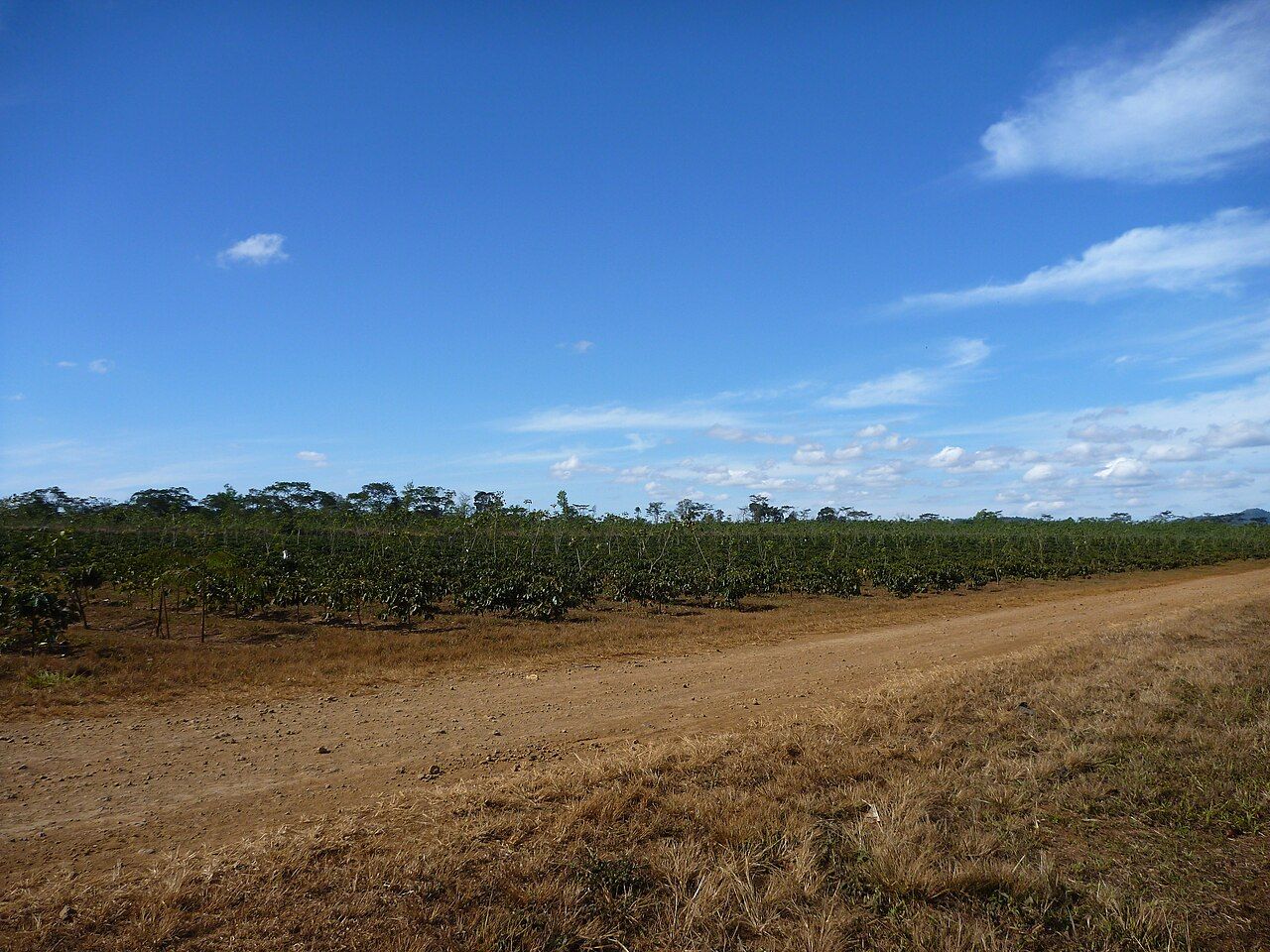

Look at the ground. The plateau’s deep red basalt soil is one reason coffee grows well here. It is an easy fact to remember because it is right there in the colour of the earth. I like explanations that don’t need dressing up. The soil, the height and the crop are enough to get started. The Bolaven is not just somewhere coffee is made after it has been brought in from elsewhere; it is coffee-growing country, with the crop rooted in the plateau itself.
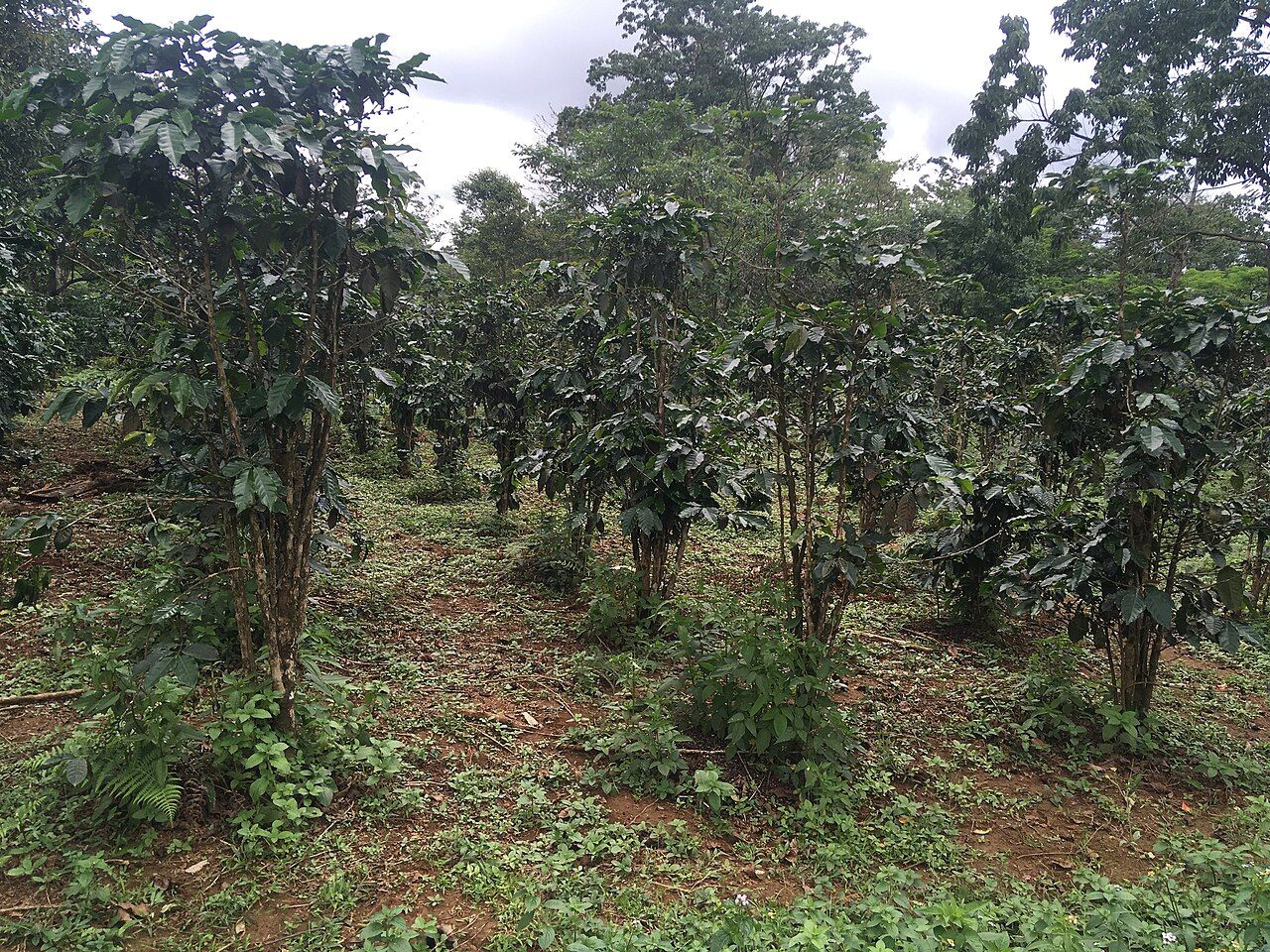
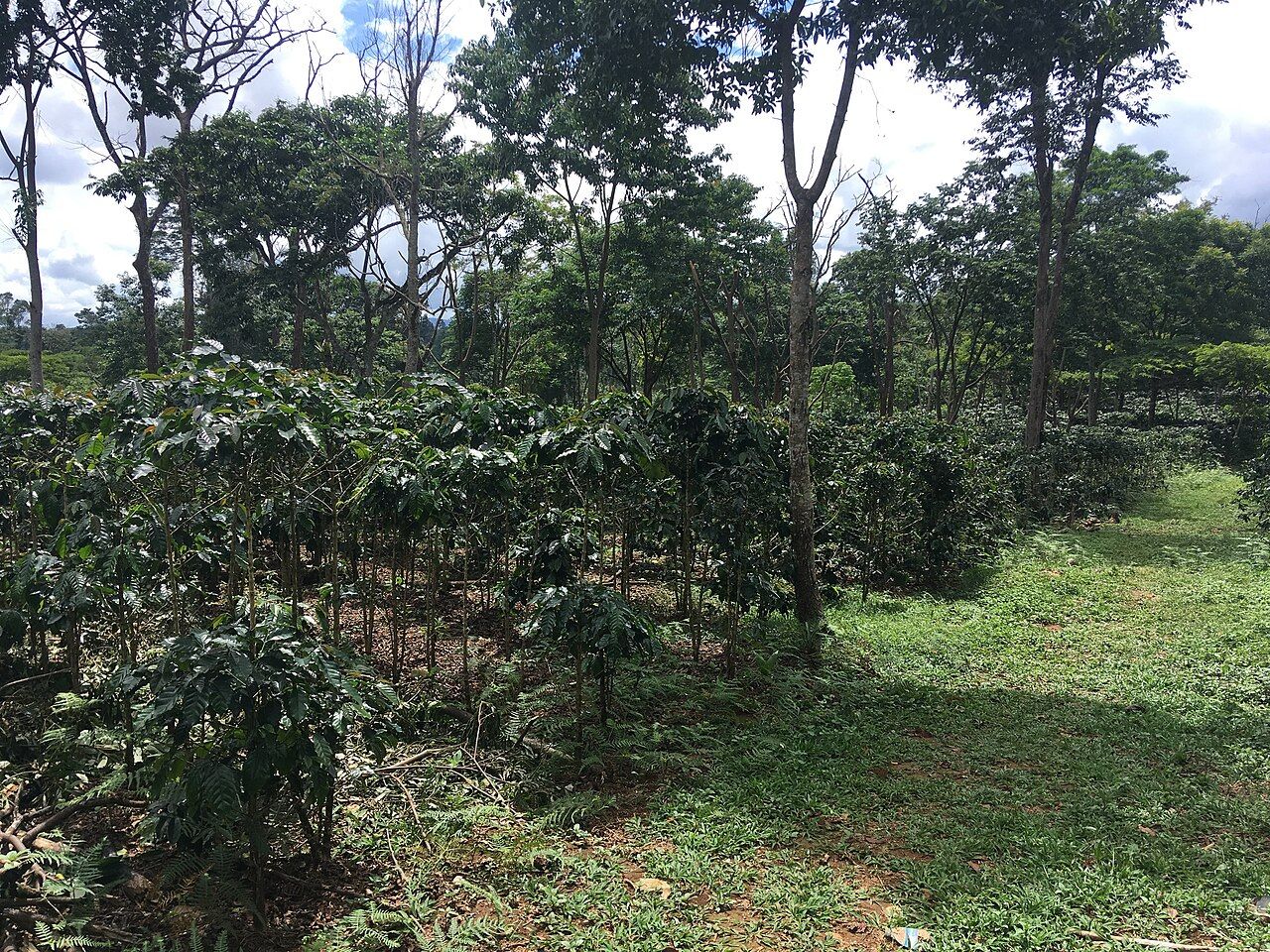
Notice the scale of the farms. Much of the plateau’s coffee comes from small family farms rather than large estates. Coffee bushes often grow under taller shade trees, so the crop is part of a layered farm landscape, not a single low blanket of green. A small farm and a broad plateau make for different kinds of scale, and I prefer looking at both. For more on the crop’s beginnings, see how the first bushes arrived; today’s route can stay with what grows here now.

Keep the season in mind. The coffee harvest on the plateau runs roughly from November into February. That gives the crop a clear place in the year. It is a useful way to set the day in order: town first, then farms, harvest and drying, with the season in mind rather than one marked day. A visit to coffee country makes more sense when the harvest is part of the picture. It is a working crop with a season, and the farm landscape changes with what is happening to the cherries.
Follow the cherries to the drying yards. Picked coffee cherries are spread on tarps or concrete yards to dry in the sun. This is the part of the process that turns the harvest into something visible and easy to understand: cherries laid out across a working surface, drying. The method is plain: cherries spread out across a working surface, left in the sun. That simple stage is enough to show how the harvest moves forward. A day in coffee country can pause here and let the crop’s next step speak for itself.
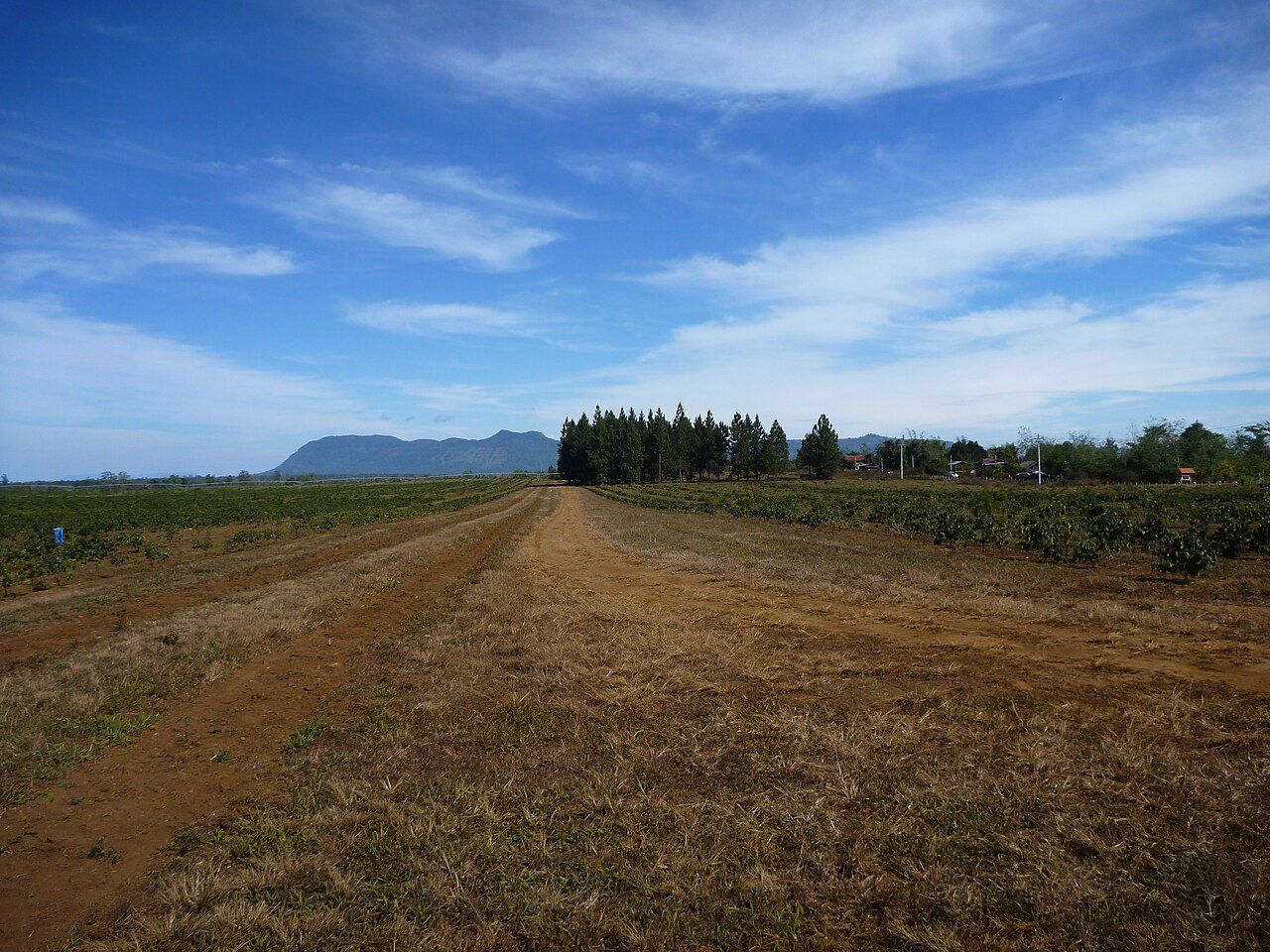

Finish by remembering that coffee is not one thing. Both arabica and robusta are grown on the Bolaven Plateau, with robusta covering the larger area. The plateau’s coffee is sold as green beans for export and roasted for the Lao market. The plateau's coffee is not a single kind of coffee, and that matters to the way the place reads. Crop, processing and destination all sit within the same story, from small farms to beans sent out or roasted for home.
The plateau's coffee is not a single kind of coffee, and that matters to the way the place reads.
End with the simplest picture. The town behind you, the red basalt soil under the coffee bushes, shade trees above them, and cherries laid out on tarps or concrete yards to dry. That is enough to carry away from Paksong. The map can fold shut on the town’s name; the coffee story keeps going across the plateau, one farm and one harvest at a time.