Paksong, a Town of Cool Mornings
Read Paksong in order: begin with its chilly mornings, take in the market and main road, then follow the town’s roads outward.
- From Pakse
- About 1 hour 15 minutes
- At its best
- Cool season
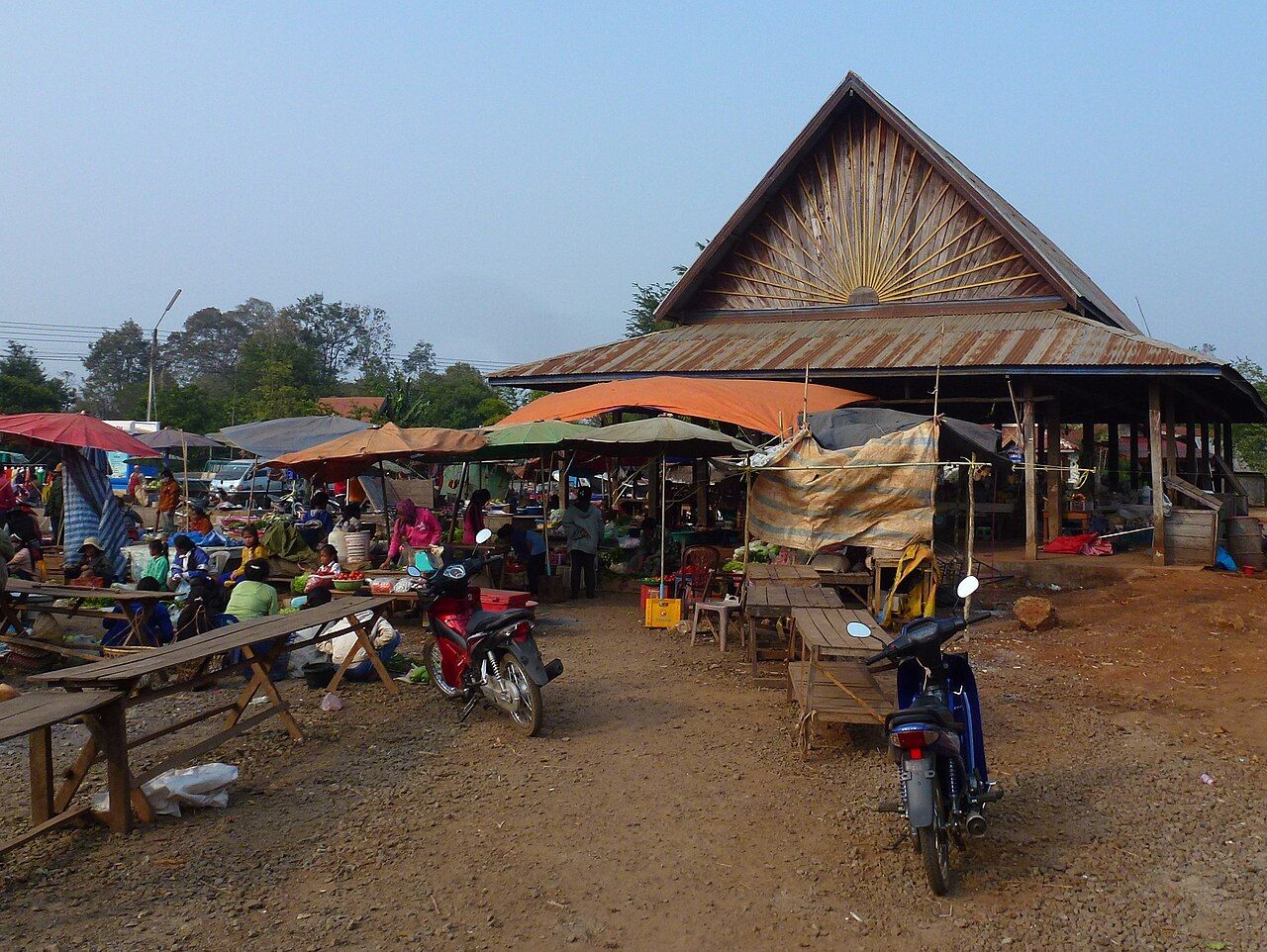
A cool morning tells you plenty about Paksong. From December to February, the air can be chilly; in the rainy season, fog often covers the town early. Round here, that highland feeling is part of the place, not a reason to hurry through it. Paksong is the district capital of Paksong district in Champasak province, and it works best when read as a town with a day-to-day purpose.
Begin with the morning itself. In the cool season, the chill can make the town feel quieter, while rainy-season fog can cover it. Those are seasonal conditions, not a promise for every morning. Give the scene a moment to settle before deciding Paksong is only a place to pass through. It is the highest town on the regular loop of the plateau, which helps explain why a morning here can feel different from one lower down.
Next, go to the market. Its stalls sell plateau vegetables, fruit, coffee and household goods. That mix is the useful part: this is a market for the things people need, alongside the crops that give the area its character. Look at the produce, then take in the range of what is being sold. The market makes the town’s working role clear without needing to dress it up. For the coffee story, start with the crop that pays for most of the town.
After the market, orient yourself on Route 16. It runs straight through the centre of Paksong, so the main road is the simplest line to follow through town. This is not a place where the centre needs decoding: the road gives it a clear spine. Take the time to notice the town as it is, a district capital and a highland service town, rather than expecting a separate show put on for visitors. That plainness is part of its appeal to me.
Then look at the buildings with the town’s history in mind. Paksong was rebuilt after the war, and most of its buildings date from after 1975. That fact changes how I read the place. The town is not a preserved old centre; its story is also one of rebuilding. A grand architectural tour would be out of place here. A simple walk along the centre is enough to notice that Paksong’s character comes from its use as much as its appearance.
Finally, trace the roads outward. From Paksong, roads lead north toward Thateng and south-east toward Attapeu. The directions make the town’s position easy to understand: it serves as a point on the plateau’s regular loop, with routes continuing beyond it. Keep the map simple and the sequence clear. Market, Route 16, then the roads out. The paper map can stay folded until it has a job to do, which is more than can be said for some maps. For another piece on the coffee here, carry on with arabica and robusta.